


Why Your Car Vibrates at High Speeds
e-CAR Menlyn

Why Does My Car Vibrate at High Speeds?
A slight vibration while driving may not seem like a major concern, but if your vehicle starts shaking at 100–120 km/h, it’s usually a sign that something isn’t quite right.
Many South African motorists only notice vibrations when travelling on the highway because that’s when suspension, steering and drivetrain components are under the greatest load.
The good news? In many cases, the problem is relatively simple to fix if diagnosed early.
At e-CAR Menlyn Motors, we regularly diagnose high-speed vibrations on cars, SUVs and bakkies. Here’s what could be causing your vehicle to shake.
Why Does My Car Vibrate at High Speeds?
A slight vibration while driving may not seem like a major concern, but if your vehicle starts shaking at 100–120 km/h, it’s usually a sign that something isn’t quite right.
Many South African motorists only notice vibrations when travelling on the highway because that’s when suspension, steering and drivetrain components are under the greatest load.
The good news? In many cases, the problem is relatively simple to fix if diagnosed early.
At e-CAR Menlyn Motors, we regularly diagnose high-speed vibrations on cars, SUVs and bakkies. Here’s what could be causing your vehicle to shake.
What Causes a Misfire in a Car?
A misfiring engine is more than just an annoyance—it is your vehicle telling you that something isn’t working properly.
If your engine hesitates, shakes, loses power or the Check Engine Light comes on, there’s a good chance your vehicle is experiencing an engine misfire.
Whether you drive a Toyota, Volkswagen, Ford, BMW, Audi, Mercedes-Benz, Nissan, Hyundai, Kia, Isuzu or any other make, a misfire should be diagnosed as soon as possible to avoid expensive repairs.
At e-CAR Menlyn Motor Services, we regularly diagnose engine misfires for motorists in Menlyn, Faerie Glen, Garsfontein, Moreleta Park, Lynnwood, Waterkloof, Elardus Park and surrounding Pretoria East suburbs.
The number one cause of vibrations at highway speeds is wheel imbalance.
Even a few grams of imbalance can cause noticeable vibrations once you’re travelling between 90 and 120 km/h.
Symptoms
- Steering wheel shakes
- Seat vibrates
- Vibration starts around 90 km/h
- Becomes worse near 110–120 km/h
- May improve slightly above that speed
What causes wheel imbalance?
- Lost wheel balancing weights
- New tyres fitted without proper balancing
- Mud inside the wheel
- Tyre wear
The Fix
A professional wheel balance usually restores smooth driving and is one of the least expensive repairs.
Sometimes the problem isn’t balancing—it’s the tyre itself.
A tyre can develop a flat spot, internal belt separation or uneven wear.
Common tyre problems
- Flat spots after emergency braking
- Tyre bulges
- Broken steel belts
- Feathered tread
- Uneven wear
Symptoms
- Constant vibration
- Steering wobble
- Vehicle pulling
- Road noise
Never ignore tyre defects, as they increase the risk of a blowout.
South African roads are notorious for potholes.
Hitting a deep pothole can slightly bend a rim.
Even a small bend may not be visible but can create vibration at freeway speeds.
Signs
- Vibration increases with speed
- Air leaks
- Wheel balancing doesn’t solve the issue
Many people believe warped brake discs cause vibration all the time.
In reality, brake discs usually only cause vibration while braking.
Typical symptoms
- Steering wheel shakes when braking
- Brake pedal pulsates
- Vehicle shudders during braking
If your car only vibrates while applying the brakes, the brake discs should be inspected.
Loose suspension parts allow the wheels to move more than they should.
Common culprits include:
- Ball joints
- Tie rod ends
- Control arm bushes
- Stabiliser links
Symptoms
- Vehicle wanders
- Steering feels loose
- Knocking noises
- Vibration over bumps
- Uneven tyre wear
Engine mountings hold the engine securely while absorbing vibrations.
As the rubber deteriorates, more engine vibration is transferred into the vehicle.
Signs
- Excessive vibration while idling
- Vibration during acceleration
- Clunk when shifting gears
- Engine movement under load
Although engine mountings can contribute to vibration, they are less likely to cause a vibration that only appears at exactly 120 km/h.
On front-wheel drive vehicles, worn CV joints or damaged driveshafts can create vibration at higher speeds.
Symptoms
- Vibration during acceleration
- Clicking when turning
- Steering wheel shake
- Vibration under load
If you drive a rear-wheel drive vehicle, SUV or bakkie, the propshaft could be responsible.
The propshaft spins thousands of times per minute at highway speeds.
If it becomes bent or loses a balancing weight, vibrations become very noticeable.
Common causes
- Damaged universal joints (U-joints)
- Bent propshaft
- Worn centre bearing
- Missing balancing weights
Symptoms
- Vibration through the floor
- Vibration under acceleration
- Worse at 100–120 km/h
- Drumming noise
Although less common, worn differential bearings or gears can produce vibration.
Warning signs
- Whining noise
- Humming at speed
- Vibration under load
- Oil leaks
- Clunking during acceleration
Differential repairs should be diagnosed early before internal damage becomes severe.
Poor wheel alignment doesn’t always cause vibration directly, but it often causes uneven tyre wear.
Once tyres wear unevenly, vibration usually follows.
Symptoms
- Vehicle pulls left or right
- Uneven tyre wear
- Steering wheel off-centre
- Increased fuel consumption
Routine wheel alignment helps extend tyre life and improves vehicle stability.


Is Your Car Vibrating at Highway Speeds?
Don’t ignore vibrations—they’re often your vehicle’s way of warning you that something needs attention.
At e-CAR Menlyn Motors, our experienced technicians can diagnose vibrations affecting your steering, suspension, tyres, brakes or drivetrain using professional equipment.
We can inspect and repair:
- Wheel balancing
- Tyres and rims
- Brake discs and pads
- Suspension components
- Engine mountings
- Propshafts and universal joints
- Differentials
- Wheel alignment
Whether your car, SUV or bakkie vibrates at 100 km/h, 120 km/h or under acceleration, we’ll identify the cause and recommend the correct repair—helping you enjoy a smoother, safer drive.
Book your vehicle inspection with e-CAR Menlyn Motors today and let our experts get you back on the road with confidence.
Is Your Car Vibrating at Highway Speeds?
Don’t ignore vibrations—they’re often your vehicle’s way of warning you that something needs attention.
At e-CAR Menlyn Motors, our experienced technicians can diagnose vibrations affecting your steering, suspension, tyres, brakes or drivetrain using professional equipment.
Whether your car, SUV or bakkie vibrates at 100 km/h, 120 km/h or under acceleration, we’ll identify the cause and recommend the correct repair—helping you enjoy a smoother, safer drive.
Book your vehicle inspection with e-CAR Menlyn Motors today and let our experts get you back on the road with confidence.
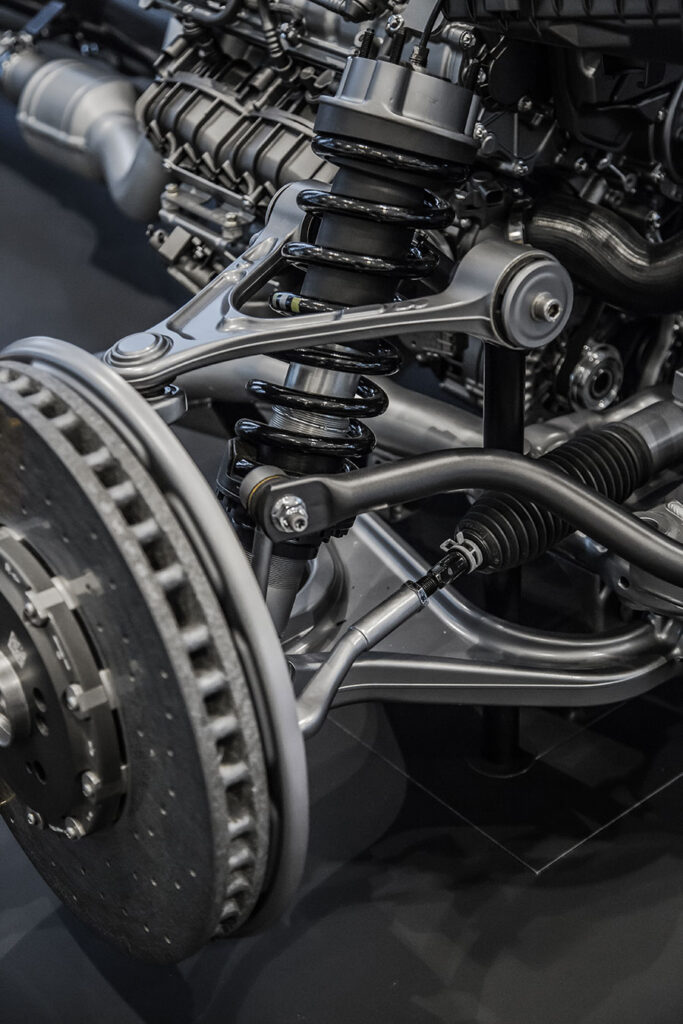
Could It Be Something Else?
Less common causes include:
- Worn wheel bearings
- Loose wheel nuts
- Damaged steering rack
- Bent axle
- Transmission problems
- Incorrect tyre pressures
- Overloaded vehicle
Because several faults can produce similar symptoms, professional diagnosis is the fastest way to identify the real cause.
Is It Safe to Keep Driving?
If your vehicle vibrates at highway speeds, don’t ignore it.
Driving with unresolved vibrations can lead to:
- Faster tyre wear
- Suspension damage
- Steering problems
- Reduced braking performance
- Increased fuel consumption
- Potential tyre failure
If the vibration becomes severe or is accompanied by unusual noises, have your vehicle inspected as soon as possible.
Frequently Asked Questions
The most common causes are wheel balancing issues, damaged tyres or bent rims. Suspension and steering components should also be checked.
Yes. Uneven wear, internal belt separation or tyre damage can all cause noticeable vibration on the highway.
Yes. A bent propshaft, worn universal joints or a failed centre bearing commonly cause vibrations in rear-wheel drive vehicles and bakkies.
Engine mountings usually cause vibration while idling or accelerating rather than at a specific road speed, although severely worn mountings can amplify vibrations from other faults.
Costs vary depending on the cause. Wheel balancing is relatively inexpensive, while replacing tyres, suspension components, a propshaft or differential can cost significantly more. An accurate diagnosis helps prevent unnecessary repairs.
Explore our services
Car Service
Car Repairs
Repairs for all car makes and models with genuine parts.
Fleet Maintenance
Service a fleet of cars or trucks with a fast turnaround time.
Routine Maintenance
Service done exactly to the manufacturer’s schedule and checklist
Safety Checks
Stay Safe with Our Detailed Vehicle Safety Assessments
Approvals & accreditations
Trust e-CAR Menlyn’s is accredited with RMI, MIWA, AA approvals, and Right to Repair Supporter for top-quality vehicle servicing and workmanship that meets industry standards.

