


OEM vs Aftermarket Parts: Which Is Better for Your Car?
Are you paying too much?

OEM vs Aftermarket Parts: Which Is Better for Your Car?
Not sure whether to choose OEM or aftermarket car parts? Discover the pros, cons, costs, and what’s best for your vehicle with expert advice from e-CAR Menlyn Motor Services.
OEM vs Aftermarket Parts: Which Is Better for Your Car?
Not sure whether to choose OEM or aftermarket car parts? Discover the pros, cons, costs, and what’s best for your vehicle with expert advice from e-CAR Menlyn Motor Services.
OEM vs Aftermarket Parts: Which Is Better for Your Car?
When your vehicle needs repairs or replacement parts, one of the first questions you may hear is:
“Would you prefer OEM or aftermarket parts?”
For many South African drivers, this can be confusing — especially when the prices differ significantly. While both options have their place, choosing the right parts for your vehicle can affect reliability, performance, safety, and long-term repair costs.
At e-CAR Menlyn Motor Services, we believe in helping our customers make informed decisions based on quality, value, and the specific needs of their vehicle.
What Are OEM Parts?
OEM stands for “Original Equipment Manufacturer.”
These are parts made by the same manufacturer that originally supplied components for your vehicle when it was built.
For example:
- A VW part supplied by Volkswagen
- A Toyota component made to Toyota’s exact specifications
- A BMW sensor designed specifically for BMW systems
OEM parts are designed to match the original part exactly in:
- size
- fitment
- quality
- performance
This means installation is usually straightforward, and compatibility issues are rare.
Advantages of OEM Parts
Perfect Fit and Compatibility
OEM parts are designed specifically for your vehicle model. This reduces the risk of incorrect fitment or installation issues.
Consistent Quality
Because OEM parts meet manufacturer standards, quality is generally very reliable.
Better for Newer Vehicles
Modern vehicles rely heavily on electronics and sensors. OEM parts help maintain correct system communication and performance.
Warranty Protection
Certain vehicle warranties may require OEM parts for some repairs.
What Are Aftermarket Parts?
Aftermarket parts are produced by third-party manufacturers rather than the vehicle manufacturer itself.
These companies create replacement parts compatible with various makes and models.
Some aftermarket brands are excellent and produce parts equal to — or sometimes better than — OEM quality. Others, however, may be lower quality and less reliable.
Advantages of Aftermarket Parts
Lower Cost
Aftermarket parts are often more affordable than OEM parts, making them attractive for budget-conscious drivers.
Wider Availability
In some cases, aftermarket parts are easier and quicker to source.
More Options
Drivers may choose between:
- economy parts
- mid-range quality
- premium performance upgrades
This flexibility can help tailor repairs to your budget and driving needs.
The Biggest Mistake Car Owners Make
Many drivers assume:
“Aftermarket automatically means poor quality.”
This is not always true.
There are reputable aftermarket manufacturers that produce excellent components used by workshops worldwide.
The real danger comes from:
- cheap, unbranded parts
- counterfeit components
- low-grade imports
Poor-quality parts can lead to:
- premature wear
- brake failure
- overheating
- suspension issues
- engine damage
- electrical faults
This is why choosing the right workshop matters just as much as choosing the part itself.
Which Parts Should Always Be High Quality?
Some components should never be compromised on quality.
These include:
- brake components
- suspension parts
- timing belt kits
- water pumps
- steering components
- engine sensors
- cooling system parts
At e-CAR Menlyn Motor Services, we only use trusted suppliers and quality-approved parts to protect your vehicle’s reliability and safety.
Why Cheap Repairs Can Become Expensive
Many motorists choose the cheapest quote without asking:
- what parts are being fitted
- whether the parts are branded
- whether warranties apply
Low-quality parts may fail sooner, resulting in:
- repeated labour costs
- breakdowns
- poor fuel economy
- additional component damage
In the long run, cheap repairs often become expensive repairs.
OEM vs Aftermarket — Which Is Better?
The answer depends on:
- your vehicle age
- your budget
- the type of repair
- your driving habits
- part availability
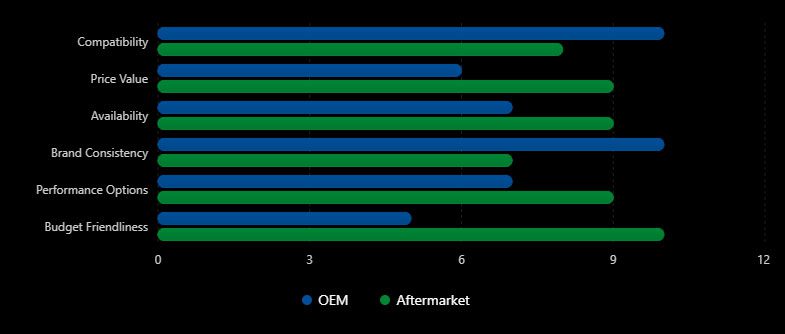
Here is a simple comparison:
General comparison between OEM and quality aftermarket vehicle parts.

Book Your Vehicle Repairs with e-CAR Menlyn Motor Services
We combine professional workmanship, trusted parts suppliers, and honest advice to keep your vehicle reliable, safe, and performing at its best.
Contact e-CAR Menlyn Motor Services today to book your next vehicle inspection or repair.
Frequently Asked Questions
Are aftermarket parts bad quality?
Not necessarily. Many reputable aftermarket brands produce excellent quality parts. The issue is usually with cheap, unbranded components.
Are OEM parts always better?
OEM parts offer guaranteed compatibility and consistent quality, but high-quality aftermarket parts can also perform extremely well.
Will aftermarket parts void my warranty?
In some cases, poor-quality or incorrect parts can affect warranty claims. Always consult a qualified workshop.
Why are OEM parts more expensive?
OEM parts often include manufacturer branding, testing standards, and dealership supply chains, which increase costs.
Can aftermarket parts improve performance?
Yes. Certain premium aftermarket parts are designed for improved performance, durability, or handling.
Explore our services
Car Service
Car Repairs
Repairs for all car makes and models with genuine parts.
Fleet Maintenance
Service a fleet of cars or trucks with a fast turnaround time.
Routine Maintenance
Service done exactly to the manufacturer’s schedule and checklist
Safety Checks
Stay Safe with Our Detailed Vehicle Safety Assessments
Approvals & accreditations
Trust e-CAR Menlyn’s is accredited with RMI, MIWA, AA approvals, and Right to Repair Supporter for top-quality vehicle servicing and workmanship that meets industry standards.

