


Buckle Up: How Seat Belts Save Lives — Practical Guide & Stats for South African Drivers

Buckle Up: How Seat Belts Save Lives — Practical Guide & Stats for South African Drivers
Learn how seat belts protect you, the different types of belts, key South African stats, and simple checks — brought to you by e-CAR Menlyn Motors, Pretoria.
Buckle Up: How Seat Belts Save Lives — Practical Guide & Stats for South African Drivers
Learn how seat belts protect you, the different types of belts, key South African stats, and simple checks — brought to you by e-CAR Menlyn Motors, Pretoria.
Practical seat-belt tips
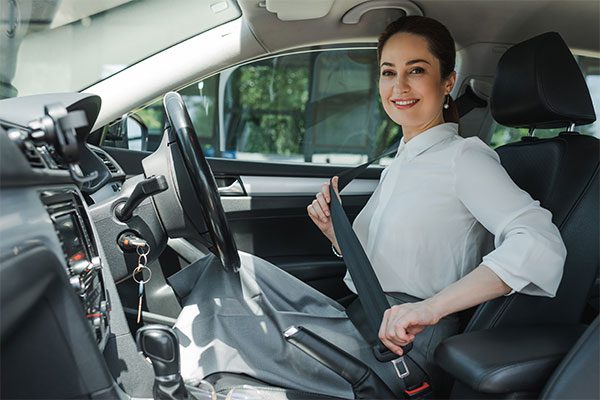
Always use a lap-and-shoulder (three-point) belt if available — they distribute forces across the chest and pelvis.
Buckle every trip — even short local journeys carry risk. (Short trips are involved in many urban collisions.) CDC
Ensure the lap belt sits low across the hips (not the stomach); the shoulder belt should cross the middle of the collarbone and chest (not the neck or under the arm). IIHS Crash Testing
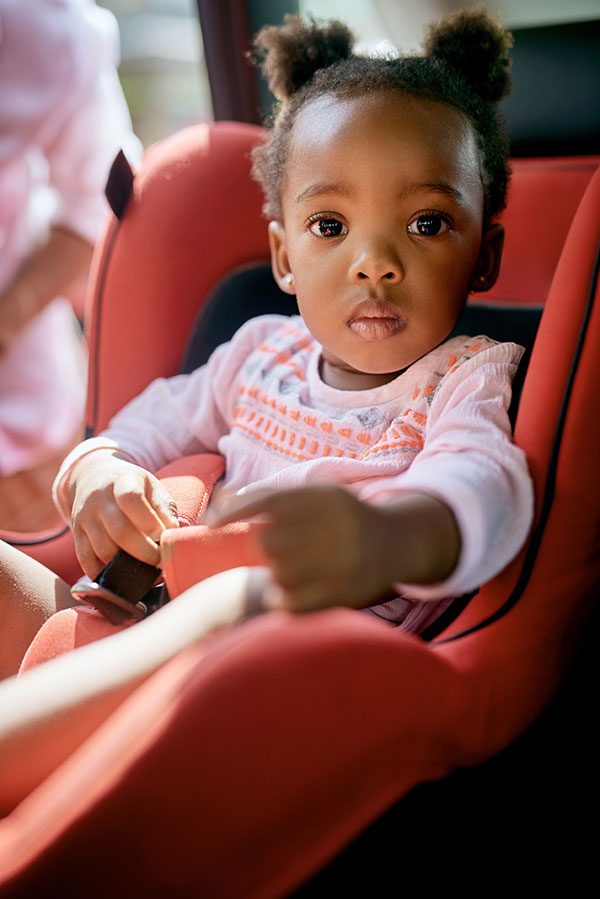
For children use the correct child restraint (rear-facing for infants, forward-facing with harness, then booster seat). Use ISOFIX anchors where available. World Health Organization
Replace any seat belt that shows signs of fraying, has reduced webbing strength after a crash, or where the retractor doesn’t lock correctly. Ask a trained technician to inspect or replace it. RTMC
Conduct a monthly quick check: buckle/unbuckle, feel for smooth retraction, check stitching and webbing, and listen for unusual noises from the retractor.
If a belt is hard to buckle or retract, don’t force it — bring the vehicle to a certified workshop (we can do this at e-CAR Menlyn Motors).
Types of seat belts
Lap belt — goes over the lap only; now uncommon as sole restraint for adults.
Lap-and-shoulder (three-point) — standard for front seats; combined lap + diagonal shoulder strap. Best for general passenger protection. IIHS Crash Testing
Four- or five-point harness — used in motorsport and child seats; anchors across both shoulders and hips for very secure restraint.
Pretensioners & load limiters — pretensioners tighten the belt instantly on impact; load limiters allow controlled webbing release to reduce chest force. Modern cars have these safety devices. IIHS Crash Testing
Child restraints & ISOFIX — dedicated child seats and the ISOFIX anchor system give reliable fitment for small occupants. World Health Organization
Festive Season
Government festive-season and enforcement reports show recent year-on-year increases in fatalities during high-travel periods and large numbers of fines for belt non-use
Key statistics
Seat belts roughly halve the risk of serious injury or death.
Public health agencies (CDC/NHTSA) state seat belts reduce serious crash-related injuries and deaths by about 50% (varies by vehicle type and seat position). CDC+1For front-seat occupants the risk of fatal injury is reduced ~45–60% when belted.
IIHS/NHTSA figures show reductions in the 45–60% range depending on vehicle class (cars vs SUVs/pickups). IIHS Crash Testing+1A very large share of passenger deaths are unrestrained.
U.S. data (for context) shows nearly half of passenger vehicle occupants killed were unrestrained in recent years — an indicator of how non-use drives fatalities. This pattern is echoed in many countries’ crash data. NHTSA+1South African road fatality: South Africa’s road traffic mortality rate is high (WHO reported ~24.5 deaths per 100,000 population using recent WHO country data) and road deaths remain a major public health issue in the region. World Health Organization+1
Enforcement and fines: Recent South African enforcement waves recorded tens of thousands of fines for seatbelt non-use during national campaigns (e.g., 23,607 fines reported in a recent enforcement period). This shows active policing and the opportunity to improve compliance.
🧍♀️ Should you wear a seat belt when pregnant?
- Yes — absolutely.
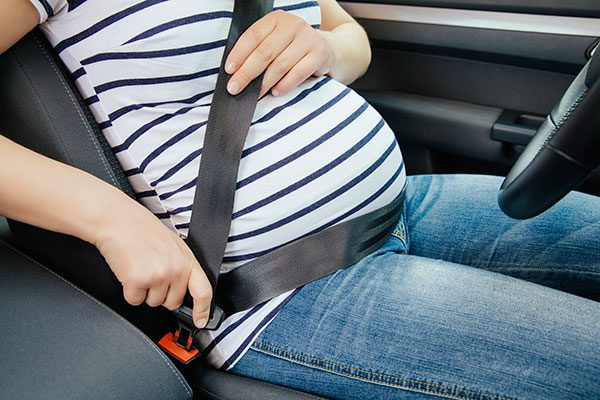
Pregnant drivers and passengers must wear seat belts at all times. A properly worn seat belt protects both mother and baby in the event of a crash by preventing the mother from hitting the steering wheel or dashboard and by reducing the risk of being thrown forward.
Here’s how to wear it correctly:
- Lap belt: Place it low and flat across the hips and upper thighs, under the belly — never across or above the bump.
- Shoulder belt: Position it between the breasts and to the side of the belly, resting across the chest and shoulder — not under the arm or behind the back.
- Seat position: Adjust the seat so that there’s as much distance as comfortable between your belly and the steering wheel/dashboard. Tilt the wheel toward your chest, not your abdomen, if it’s adjustable.
- Airbags stay ON. Airbags and seat belts work together — airbags alone aren’t enough, and turning them off increases the risk of severe injury.
Festive Season
Government festive-season and enforcement reports show recent year-on-year increases in fatalities during high-travel periods and large numbers of fines for belt non-use
👶 What about a child in the front passenger seat?
It depends on the child’s age, size, and the vehicle’s airbag setup — but in general:
Best practice: Children under 12 years old or under 1.5 m (approx. 4 ft 11 in) tall should ride in the back seat, properly restrained in an age-appropriate child seat or booster seat.
If a rear-facing child seat must be placed in the front (for example, if the vehicle has no rear seats like some single-cab bakkies):
Deactivate the front passenger airbag completely.
Move the seat as far back as possible from the dashboard.
For forward-facing child seats:
The airbag should stay ON, but the seat must be moved back as far as possible to reduce deployment force.
Rule of thumb: Rear seats are always safest for children. The front seat should only be used when absolutely necessary and only if airbags are adjusted appropriately.
Drive safer with a free seat-belt safety check at e-CAR Menlyn Motors with every car service.
Book your quick seat belt inspection. Call Menlyn Motors on [012 348 3090] or visit us at 275 Bali Street, Menlyn, Pretoria.
Approvals & accreditations
Trust e-CAR Menlyn’s is accredited with RMI, MIWA, AA approvals, and Right to Repair Supporter for top-quality vehicle servicing and workmanship that meets industry standards.
Explore our services
Car Service
Car Repairs
Repairs for all car makes and models with genuine parts.
Fleet Maintenance
Service a fleet of cars or trucks with a fast turnaround time.
Routine Maintenance
Service done exactly to the manufacturer’s schedule and checklist
Safety Checks
Stay Safe with Our Detailed Vehicle Safety Assessments

