


Car-Overheating-After-a-New-Radiator-e-CAR-Menlyn

Why This Vehicle Kept Overheating After the Radiator Was Replaced
The owner had already replaced the radiator.
For a short while, it appeared that the overheating problem had been solved. Then the temperature gauge began climbing again—particularly in traffic and when the vehicle was driven for longer distances.
There was no obvious coolant pouring onto the ground, and the new radiator appeared to be in good condition.
Understandably, the owner was frustrated.
If the radiator was new, why was the engine still overheating?
When the vehicle arrived at e-CAR Menlyn Motor Services, we did not assume that the replacement radiator was faulty. An engine’s cooling system consists of several components, and replacing one component cannot solve the problem if the actual fault lies elsewhere.
Why This Vehicle Kept Overheating After the Radiator Was Replaced
The owner had already replaced the radiator.
For a short while, it appeared that the overheating problem had been solved. Then the temperature gauge began climbing again—particularly in traffic and when the vehicle was driven for longer distances.
There was no obvious coolant pouring onto the ground, and the new radiator appeared to be in good condition.
Understandably, the owner was frustrated.
If the radiator was new, why was the engine still overheating?
When the vehicle arrived at e-CAR Menlyn Motor Services, we did not assume that the replacement radiator was faulty. An engine’s cooling system consists of several components, and replacing one component cannot solve the problem if the actual fault lies elsewhere.
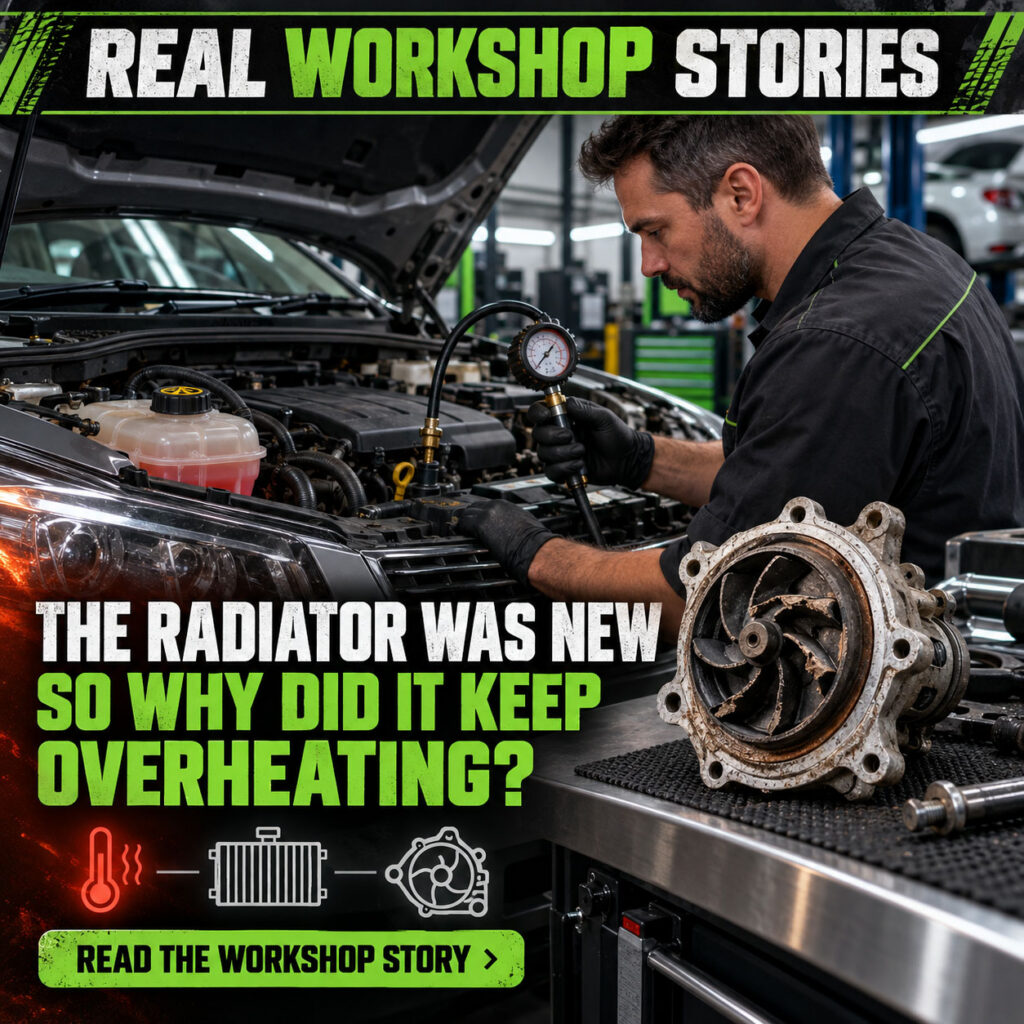
What We Checked First
We allowed the engine to cool completely before opening or testing the cooling system.
This is important because removing a cap from a hot, pressurised cooling system can release boiling coolant and cause serious injury.
We then checked:
The coolant level and condition
Signs of external coolant leakage
The radiator and hose connections
The expansion-tank cap
The operation of the electric cooling fans
Whether the thermostat was opening
Coolant temperatures at different points in the system
Whether the cooling system was holding pressure
Signs of trapped air
Evidence of combustion gases entering the coolant
Coolant circulation through the engine and radiator
The new radiator was not visibly leaking, and the cooling fans were operating.
The system also did not immediately show the typical signs we would expect from a major external coolant leak.
But as the engine warmed up, the temperature was not distributed through the cooling system as expected.
The Clue Was Poor Coolant Circulation
The engine was producing heat, but that heat was not being transferred efficiently to the radiator.
Parts of the cooling system became very hot while coolant flow through other areas appeared weak. Increasing engine speed did not produce the circulation we expected.
This directed our attention towards the water pump.
A water pump uses an internal impeller to move coolant through the engine, radiator and heater system. From the outside, a pump may appear normal. It may not leak or make an obvious bearing noise.
Internally, however, the impeller can become damaged, badly worn or loose on its shaft.
When that happens, the pulley may still turn while the impeller fails to move enough coolant.
What the Owner Told Us
The customer described the problem like this:
“The radiator was replaced because the car was overheating. It seemed better at first, but now the temperature climbs again. I don’t understand how it can still overheat with a new radiator.”
The owner had noticed that:
The temperature was reasonably stable during short trips
It began rising after the engine had been running for longer
The problem was worse in slow-moving traffic
The heater sometimes stopped producing consistently hot air
No large coolant leak was visible beneath the car
Topping up the coolant did not permanently solve the problem
The inconsistent cabin-heater temperature was an important clue. The heater relies on hot coolant circulating through a small heater core. If the coolant does not circulate properly, the heater may become hot and then unexpectedly cool down.
However, that symptom alone was not enough to confirm the cause.
A New Radiator Does Not Replace the Entire Cooling System
The radiator’s job is to release heat from the coolant as air passes through it.
But the radiator cannot do this effectively unless the coolant is being circulated through the engine and back to the radiator.
The cooling system also depends on:
The water pump
The thermostat
Cooling fans
Coolant hoses
The expansion tank and pressure cap
Temperature sensors
Correct coolant level and concentration
Proper bleeding of trapped air
Unrestricted coolant passages
A correctly sealed engine and cylinder head
A fault in any of these areas can cause overheating—even when the radiator is brand new.
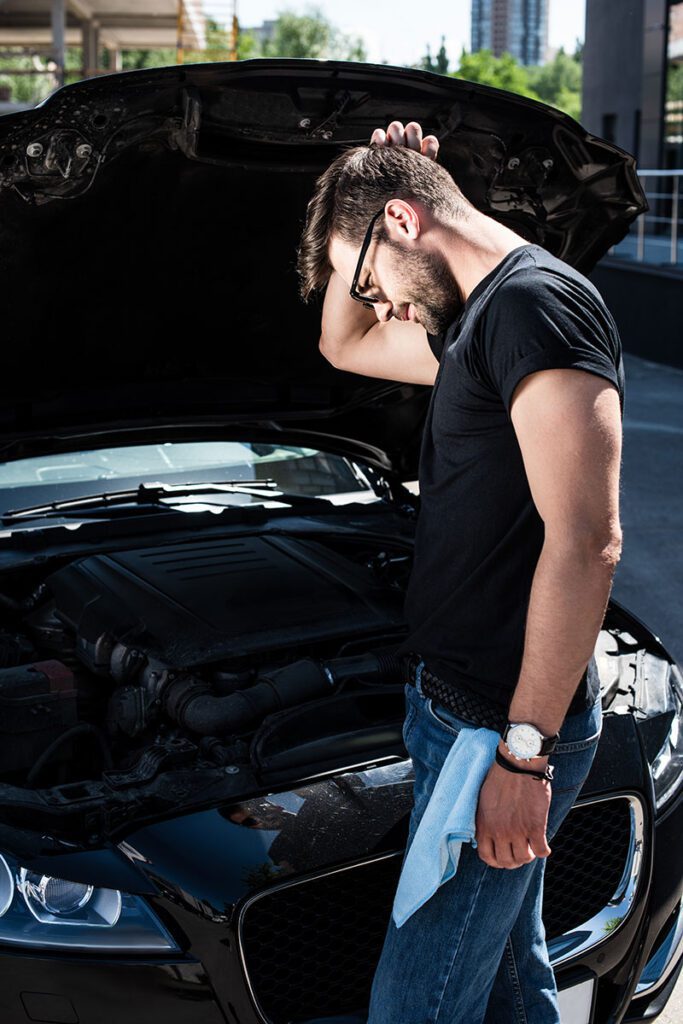
What We Found
Once the water pump was removed, the fault became clear.
The pump’s impeller had deteriorated and was no longer circulating coolant effectively through the engine.
It had not stopped working completely. At lower temperatures and during short trips, it moved just enough coolant to make the vehicle appear normal.
As the engine produced more heat, however, the reduced circulation could no longer control the temperature.
The new radiator was capable of cooling the coolant—but insufficient coolant was reaching it.
That was why replacing the radiator had not solved the original problem.

Why the Fault Was Easy to Misdiagnose
An overheating engine does not automatically mean that the radiator is defective.
A blocked, leaking or damaged radiator can certainly cause overheating, but similar symptoms may be caused by:
A worn or damaged water pump
A thermostat stuck closed
Cooling fans that do not switch on correctly
Air trapped in the cooling system
A faulty pressure cap
Collapsed or obstructed hoses
Incorrect coolant
A faulty temperature sensor
A cylinder-head gasket problem
Restricted coolant passages
In this case, the radiator may have shown signs of age or deterioration and could have required replacement. But it was not the only fault responsible for the overheating.
Replacing a visibly worn component is not the same as confirming the complete cause of a problem.

The Repair
After discussing the findings with the owner, the damaged water pump was replaced.
The cooling system was then:
Reassembled correctly
Filled with the appropriate coolant mixture
Bled to remove trapped air
Pressure-tested
Brought up to operating temperature
Checked for proper thermostat and fan operation
Monitored for consistent coolant circulation
Inspected again for leaks
The vehicle was then road-tested under conditions that allowed it to reach normal operating temperature.
This time, the temperature remained stable. The cabin heater produced consistent heat, the cooling fans operated normally and there were no signs of the previous overheating condition.
The radiator had not needed to be replaced again.
The real problem was that the coolant was not being moved through it properly.
Why Repeated Overheating Should Not Be Ignored
Every time an engine overheats, there is a risk of additional damage.
Continued driving can result in:
Cylinder-head distortion
Head-gasket failure
Damage to seals and gaskets
Coolant loss
Contaminated engine oil
Cracked plastic cooling-system components
Severe internal engine damage
If the temperature warning light comes on or the gauge moves into the red, continuing to drive can turn a cooling-system repair into a much more expensive engine repair.
Stop somewhere safe, switch off the engine and allow it to cool. Never remove the radiator or expansion-tank cap while the system is hot.

What This Repair Taught Us
The replacement of a component does not necessarily confirm that the original cause has been found.
When a vehicle continues overheating after a radiator, thermostat or cooling fan has been replaced, the complete system needs to be tested methodically.
The correct question is not simply:
“Which cooling-system part has not been replaced yet?”
The better question is:
“Why is the engine unable to control its temperature?”
In this case, checking coolant circulation led us to the underlying fault.
Is Your Car Still Overheating After a Repair?
If your vehicle continues overheating after the radiator, thermostat, fan or another cooling-system component has been replaced, avoid replacing more parts based on guesswork.
e-CAR Menlyn Motor Services can inspect the cooling system, test for leaks, check coolant circulation and investigate why the engine temperature is rising.
Finding the cause early may help prevent serious engine damage.
Book a Cooling-System Inspection
📍 Conveniently located in Menlyn, Pretoria
🔧 Trusted repairs for all major vehicle brands
📞 Contact e-CAR Menlyn Motor Services today and let us get your engine running smoothly again.
Is Your Car Still Overheating After a Repair?
If your vehicle continues overheating after the radiator, thermostat, fan or another cooling-system component has been replaced, avoid replacing more parts based on guesswork.
e-CAR Menlyn Motor Services can inspect the cooling system, test for leaks, check coolant circulation and investigate why the engine temperature is rising.
Finding the cause early may help prevent serious engine damage.
Book a Cooling-System Inspection
📍 Conveniently located in Menlyn, Pretoria
🔧 Trusted repairs for all major vehicle brands
📞 Contact e-CAR Menlyn Motor Services today and let us get your engine running smoothly again.
Explore our services
Car Service
Car Repairs
Repairs for all car makes and models with genuine parts.
Fleet Maintenance
Service a fleet of cars or trucks with a fast turnaround time.
Routine Maintenance
Service done exactly to the manufacturer’s schedule and checklist
Safety Checks
Stay Safe with Our Detailed Vehicle Safety Assessments
Approvals & accreditations
Trust e-CAR Menlyn’s is accredited with RMI, MIWA, AA approvals, and Right to Repair Supporter for top-quality vehicle servicing and workmanship that meets industry standards.

