


The Owner Thought Their Car Needed Brake Pads
e-CAR Menlyn
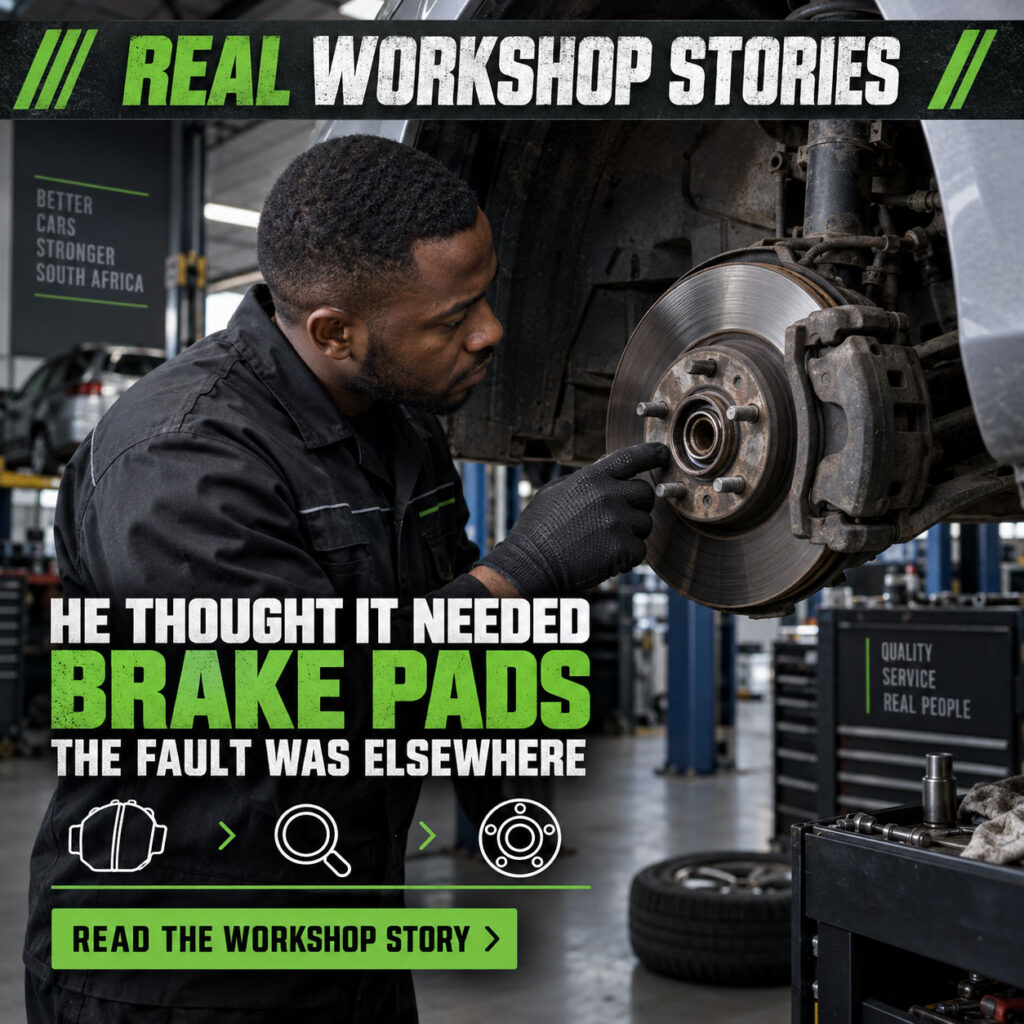
The Owner Thought Their Car Needed Brake Pads—But the Fault Was Elsewhere
A grinding or rumbling noise seemed to be coming from the front of the car.
The owner noticed it most clearly while slowing down and was understandably concerned about the brakes. By the time the vehicle arrived at e‑CAR Menlyn Motor Services, the owner was expecting us to replace the front brake pads.
That would have been an easy assumption to accept—but replacing parts based only on a customer’s description is not proper fault-finding.
The Owner Thought Their Car Needed Brake Pads—But the Fault Was Elsewhere
A grinding or rumbling noise seemed to be coming from the front of the car.
The owner noticed it most clearly while slowing down and was understandably concerned about the brakes. By the time the vehicle arrived at e‑CAR Menlyn Motor Services, the owner was expecting us to replace the front brake pads.
That would have been an easy assumption to accept—but replacing parts based only on a customer’s description is not proper fault-finding.
We inspected the vehicle first.
The front brake pads still had usable material remaining, and the noise was not being caused by worn-out pads. The actual fault was nearby, but it was not part of the braking system.
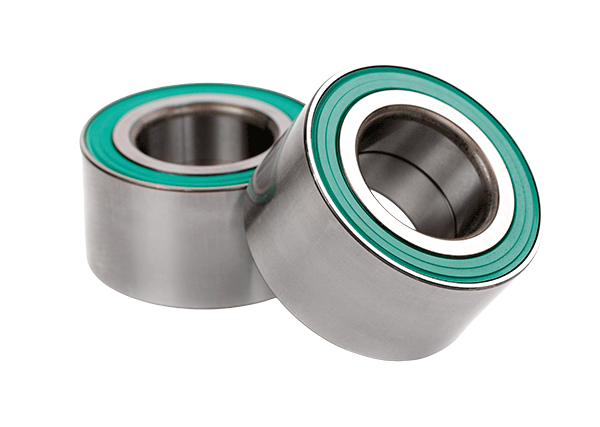
A worn front wheel bearing was creating the noise.
What the Driver Experienced
The owner described the problem as a rough grinding or humming sound coming from the front of the vehicle.
It became more noticeable as the car gained speed and sometimes appeared louder when the driver slowed down. Because the sound seemed to come from the wheel area, the owner assumed the brake pads had worn down.
This was a perfectly reasonable conclusion. Worn brake pads can produce scraping, squealing or grinding noises—but several other components near the wheels can produce similar symptoms.
The important detail was that the noise was not only present while the brake pedal was being pressed.
That gave us a reason to look beyond the brake pads.
We Checked the Brakes First
Because the customer was concerned about the brakes, they were inspected carefully.
We checked:
- The remaining front brake-pad material
- The condition of the brake discs
- The brake calipers and related hardware
- Whether a pad wear indicator was touching a disc
- Whether anything was trapped between the disc and backing plate
- Signs of excessive heat or uneven braking
- The condition of the brake hoses and visible components
The pads were not new, but they had not reached the point where they required immediate replacement. There was also no metal-to-metal contact that would explain the grinding sound.
Replacing the pads would therefore not have solved the customer’s complaint.
The Noise Continued Without Braking
During the assessment, the noise could still be heard while the vehicle was moving without the brakes being applied.
It changed with road speed rather than engine speed. It also became slightly more noticeable when the vehicle’s weight shifted while turning.
Those symptoms pointed us towards a rotating component at the wheel.
When a vehicle turns, its weight places a different load on the left and right wheel bearings. A worn bearing may become louder or quieter as that load changes. This does not prove that a bearing is faulty, but it is a useful diagnostic clue.
The car was raised so that the wheel, hub, suspension and steering components could be checked safely.
What We Found
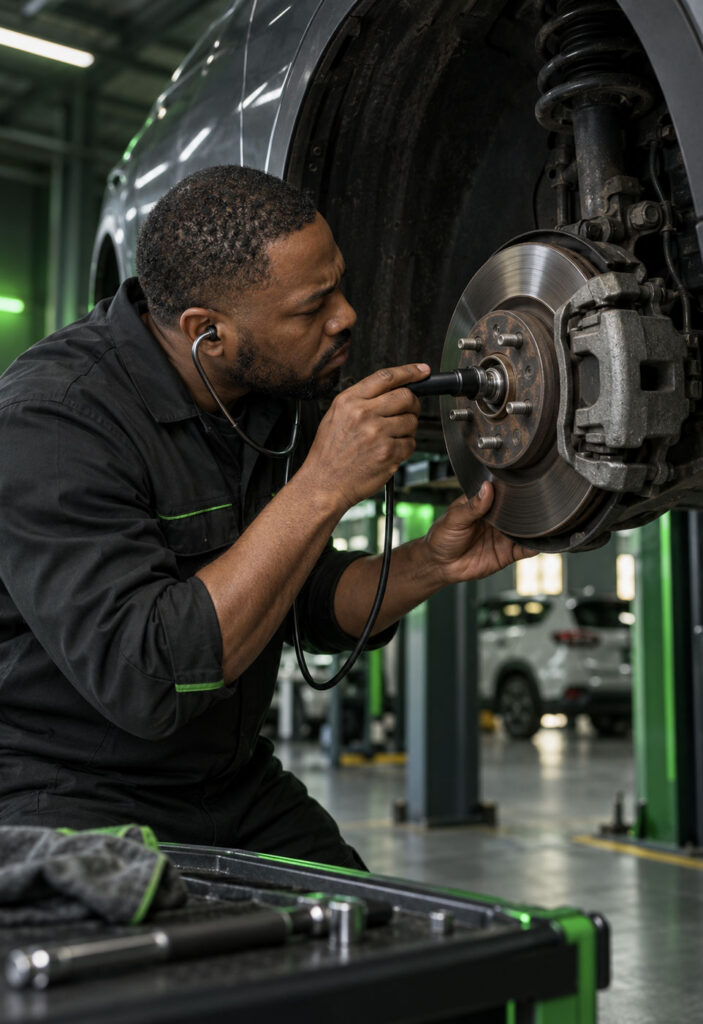
The affected front wheel did not rotate as smoothly and quietly as it should.
A closer inspection detected roughness from the wheel-bearing area. The bearing had begun to wear internally, producing the rumbling or grinding noise the driver could hear inside the car.
Because the wheel bearing and brake components are situated close together, noise from one can easily be mistaken for noise from the other.
From the driver’s seat, it simply sounded as though something was wrong near the front wheel.
The owner had correctly recognised that the noise required attention—the assumed cause was simply not the actual cause.
What Does a Wheel Bearing Do?
A wheel bearing allows the wheel and hub to rotate smoothly while supporting the vehicle’s weight.
It must cope with:
- The weight of the vehicle
- Cornering forces
- Acceleration and braking forces
- Potholes and uneven road surfaces
- Thousands of kilometres of continual rotation
A bearing contains precisely manufactured internal surfaces designed to move with very little friction. When those surfaces wear or become damaged, the bearing may begin producing a humming, rumbling or grinding sound.
The noise usually changes as road speed increases.
Why It Sounded Like Worn Brake Pads
Brake pads, discs, wheel bearings and hubs are all located in approximately the same area. Sound and vibration can also travel through the suspension and vehicle body, making it difficult for a driver to identify the exact source.
Some of the symptoms can overlap:
| Symptom | Possible brake-pad problem | Possible wheel-bearing problem |
|---|---|---|
| Noise from the wheel area | Yes | Yes |
| Grinding or scraping sound | Yes | Yes |
| Noise only when braking | More likely | Less likely |
| Noise changes with road speed | Possible | Common |
| Humming or rumbling while cruising | Unusual | Common |
| Noise changes while turning | Unusual | Possible |
| Brake warning indicator | Possible | No |
This table can provide clues, but it should not be used as a diagnosis. Brake, tyre, suspension and drivetrain faults can produce similar symptoms.
The Repair
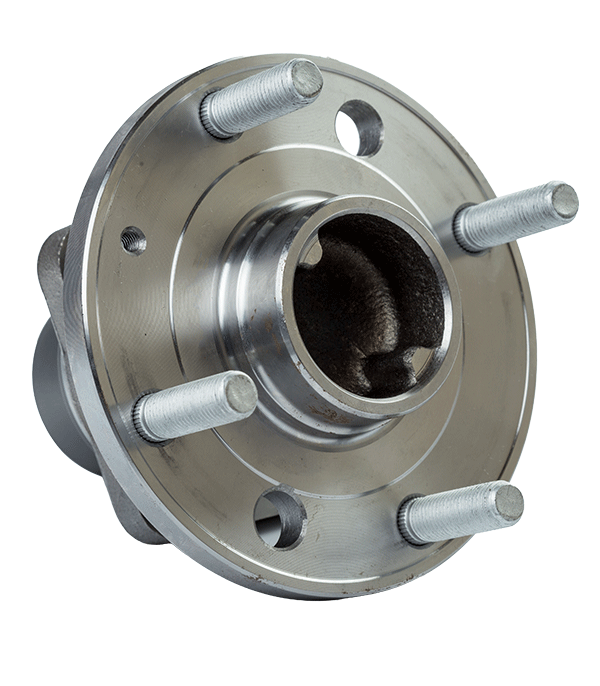
Once the worn wheel bearing had been identified and the repair authorised, the affected bearing or hub assembly was replaced according to the vehicle’s requirements.
The surrounding components were checked before everything was reassembled correctly.
The vehicle was then road-tested again.
The rumbling noise was gone, the wheel rotated normally, and the original complaint had been resolved. New brake pads were not fitted because they were not the cause of the problem.
The customer paid for the repair the vehicle needed—not for brake parts that would have left the original noise unresolved.
What Could Happen If a Worn Wheel Bearing Is Ignored?
A worn wheel bearing will not repair itself. Wear can become progressively worse and may eventually affect the vehicle’s stability and safety.
Possible consequences include:
- Increasing noise and vibration
- Excessive movement at the wheel
- Uneven tyre wear
- Heat building up around the hub
- Damage to related components
- Reduced steering stability
- ABS or wheel-speed sensor problems on some vehicles
- In severe cases, unsafe wheel movement or bearing failure
A light humming sound may not feel urgent, but it should still be investigated before the wear becomes more serious.
If the noise suddenly becomes severe, the steering feels unstable or the wheel area becomes excessively hot, the vehicle should not be driven unnecessarily.
Is Your Engine Running Rough?
If your vehicle is shaking, hesitating, losing power or displaying a Check Engine Light, don’t wait for a small problem to become a major repair.
The experienced technicians at e-CAR Menlyn Motor Services provide professional engine diagnostics and repairs for motorists throughout Menlyn, Faerie Glen, Garsfontein, Moreleta Park, Lynnwood, Waterkloof, Elardus Park and Pretoria East.
📍 Conveniently located in Menlyn, Pretoria
🔧 Trusted repairs for all major vehicle brands
📞 Contact e-CAR Menlyn Motor Services today and let us get your engine running smoothly again.
Book an inspection with e‑CAR Menlyn Motor Services in Menlyn/Newlands, Pretoria.
Similar Noise Does Not Always Mean the Same Repair
A noise near a wheel could be caused by:
- Worn brake pads
- Damaged or uneven brake discs
- A stone or debris near the brake backing plate
- A sticking brake caliper
- A worn wheel bearing
- A damaged tyre
- A worn CV joint
- Loose or worn suspension components
- A bent backing plate
- Another rotating component
This is why a workshop should inspect and test the vehicle before recommending parts.
Two cars can arrive with almost identical noises and require completely different repairs.
What Should You Tell the Workshop?
You do not need to identify the faulty part yourself. A description of what you experience is often more useful than an attempted diagnosis.
Tell the workshop:
- When the noise first started
- Which side it appears to come from
- Whether it changes as the vehicle speeds up
- Whether it happens only when braking
- Whether it changes while turning
- Whether you recently struck a pothole
- Whether any brake, tyre or suspension work was recently performed
- Whether you feel vibration through the steering wheel, seat or brake pedal
These details can help the technician reproduce the symptom and narrow down its possible causes.
A Diagnosis Before a Parts List
In this case, the owner did the right thing by arranging an inspection.
The noise was real and required attention. It simply was not being caused by the part the owner expected.
At e‑CAR Menlyn Motor Services, our aim is to determine what is causing the symptom before recommending a repair. Proper testing can prevent unnecessary parts from being fitted and helps ensure that the actual problem is resolved.
If your car is grinding, humming, squealing or making a new noise near one of the wheels, do not wait for it to become worse.
Explore our services
Car Service
Car Repairs
Repairs for all car makes and models with genuine parts.
Fleet Maintenance
Service a fleet of cars or trucks with a fast turnaround time.
Routine Maintenance
Service done exactly to the manufacturer’s schedule and checklist
Safety Checks
Stay Safe with Our Detailed Vehicle Safety Assessments
Approvals & accreditations
Trust e-CAR Menlyn’s is accredited with RMI, MIWA, AA approvals, and Right to Repair Supporter for top-quality vehicle servicing and workmanship that meets industry standards.

